
Shedwood Goes Hy-Tech
One of the last things I ever wanted to introduce to the beautiful native birds and trees of Shedwood Bush was PLASTIC!
However, visitors to the Bush may have noticed the addition of several different forms of hy-tech (hydrocarbon) objects to the landscape in recent months. Bright yellow wasp-bait stations, flouro pink trap tags & bright white plastic trapping eggs have been placed along the trails after much careful consideration. I had searched long and hard for an environmentally friendly solution, but had to accept that recycled plastic technology just wasn’t mature enough yet.
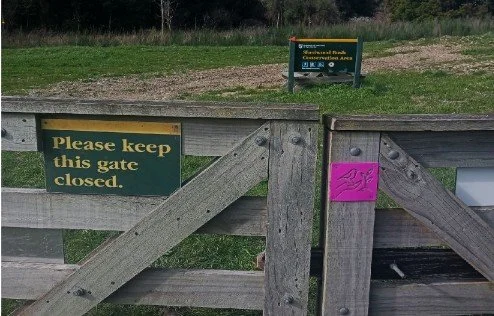
Shedwood Bush Betterer’s flouro pink logo can now be found every 100m along the loop and summit walking tracks.
We researched a bit about the history of plastic and discovered that the first form of plastic was made in 1862 using bio-based cellulose treated with nitric acid - designed as a waterproof alternative to ivory and tortoiseshell. Bakelite was the first fully synthetic plastic, made through the combination of phenol and formaldehyde in 1907 and seeped into the world from there. The word plastic comes from the Greek plastikos, meaning ‘capable of being shaped or molded.’
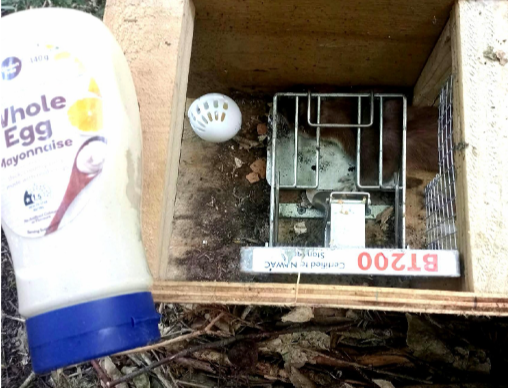
Here’s a piece of hy-tech plastic shaped like an egg. It foiled a bird-egg eating stoat after we filled the egg with mayonnaise and put it in a trap made by Tapawera Menzshed.
Please forgive us for going hy-tech. Shedwood Bush Betterers try our best to keep it carbon-zero.
Mark Soperman
Quick Links
LureGard egg- https://www.traptools.co.nz/
Our pink logo - https://www.nelsonplastics.co.nz/
Predator Free NZ - https://predatorfreenz.org/
Forest & Bird - https://www.forestandbird.org.nz/campaigns/predator-free-new-zealand
Department of Conservation Predator Free 2050 - https://www.doc.govt.nz/nature/pests-and-threats/predator-free-2050/