
What’s in a name? Exploring the te reo Māori place names around us.
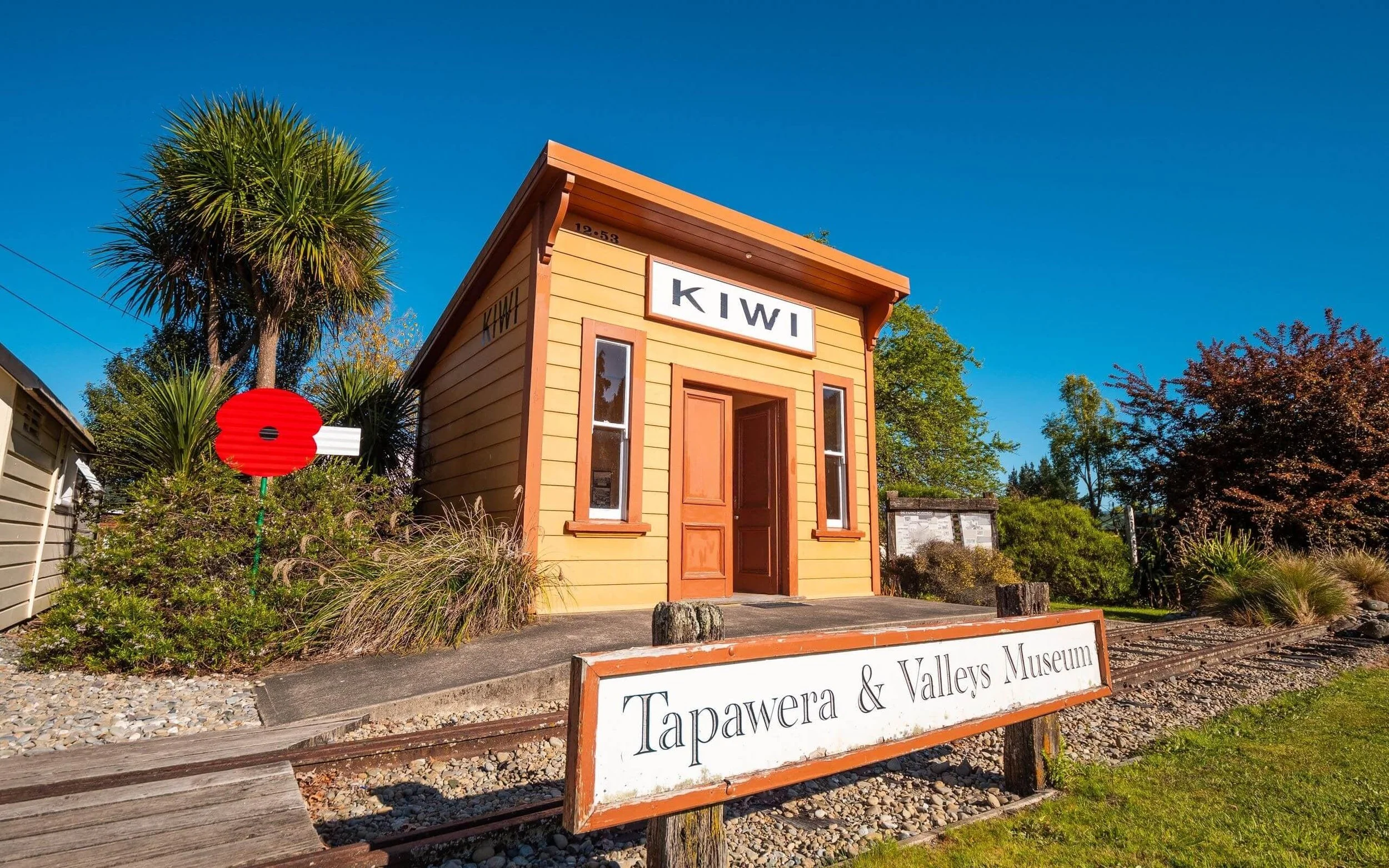
Image Credit: nelsontasman.nz
Tapawera. Motupiko. Kohatu. Wangapeka. Wai-iti. Motueka.
Many of us say these names every day.
They’re written on our road signs and in our addresses. They name the awa (rivers) we swim beside, the valleys we travel through and the kāinga (places we call home).
But how often do we stop to think about what those names mean, where they came from, or whether we are saying them correctly?
For Te Wiki o te Reo Māori – Māori Language Week, we’re taking a closer look at some of the ingoa wāhi (place names) around us.
Māori place names can do much more than label a point on a map. They can describe the whenua (land), plants, animals, and waterways; remember people or events; or preserve journeys and histories across generations. Some Māori place names even acted as oral maps, recording routes through the landscape.
And, as we discovered when we started looking into our own names, sometimes there is more than one layer to the story.
Tapawera
Ta-pa-we-ra
We’ll start at the centre of it all.
The literal elements of the name are commonly recorded as:
tapa – edge or fringe
wera – hot or burnt
So Tapawera can be understood as something like “burnt edge” or “hot edge.”
But local history adds a much more colourful story.
Tapawera Connect’s Mark Soper shared an account recorded by his grandfather, local historian J.N.W. (Jeff) Newport, author of the 1962 book Footprints: The Story of the Settlement and Development of the Nelson Back Country District.
According to Newport’s account, before the township became known as Tapawera, the area was known as Maniaroa, which he described as the traditional Māori name for the area and translated as “long peninsula.”
Historical records add another layer to the story. Maniaroa was the name of a farm and homestead belonging to George MacMahon, whose land sat around the area that would become the Tapawera township.
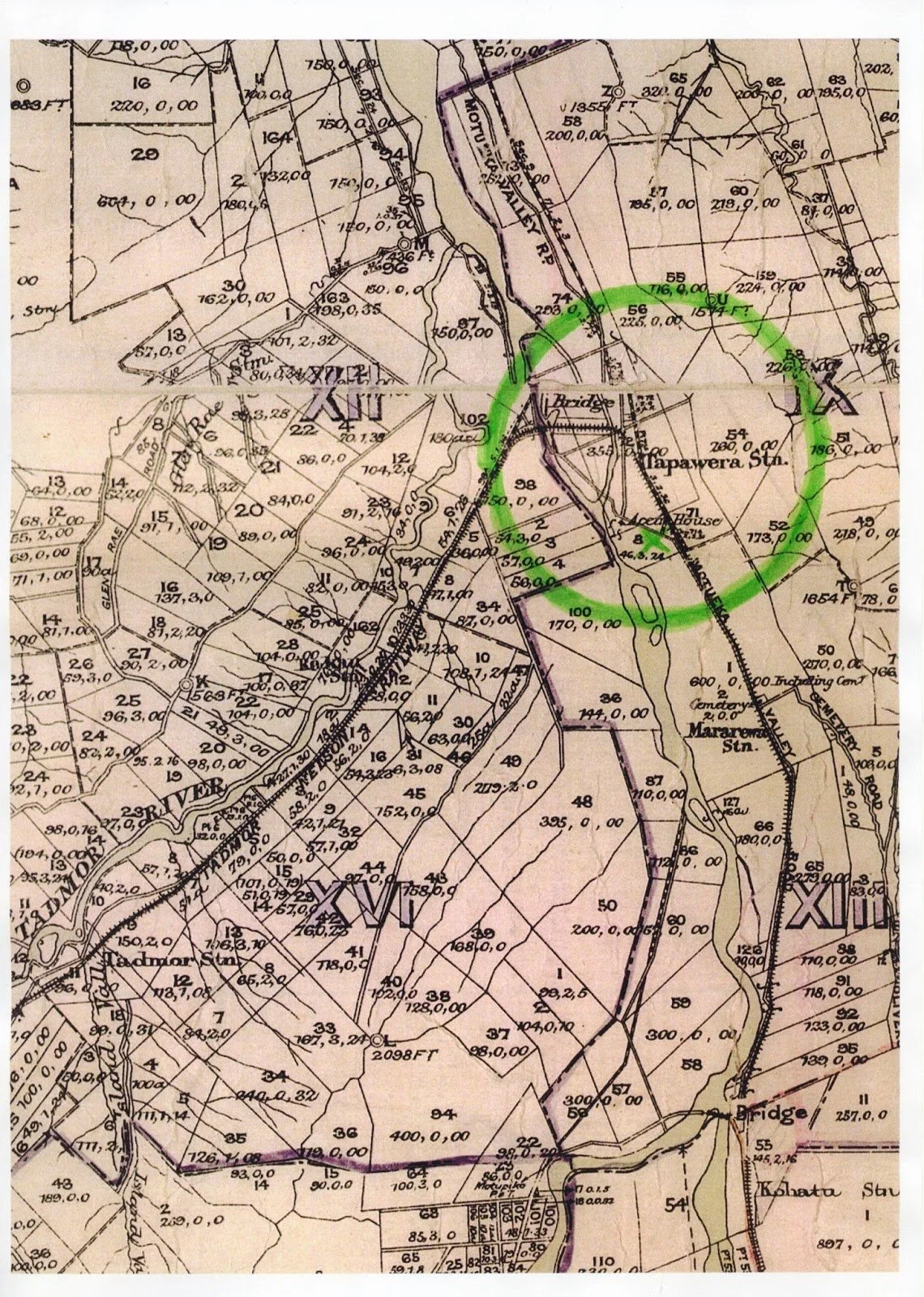
Image source: Rustlings in the Wind: The Ferry Inn at Tapawera
A very interesting blog about local history - Highly recommended read
When the railway construction camp was established here in the early 1900s, it took the name Maniaroa from MacMahon’s nearby property.
By 1906, however, the name Maniaroa was causing a practical problem. Postal officials considered it too similar to Manaroa in the Pelorus Sound. They chose a new name for the Post Office and railway station: Tapawera.
But why Tapawera?
For that, Newport takes us back to a dramatic summer several decades earlier.
The summer the valley burned
In January 1886, enormous bush fires swept through this part of the Nelson backcountry.
Newspapers at the time reported smoke and fire throughout the Clark and Motupiko valleys, with one report describing a fire stretching for around 30 miles (48.3km). The West Coast coach was forced to turn back because it simply couldn't get through.
A few days later, another report said fires had been burning in the Motupiko, Clark, Tadmor and Hope valleys. The heat was described as intense, smoke made breathing difficult, and hillsides on either side of the road glowed with fire.
According to J.N.W. Newport’s account, coach operator Tom Newman drove through the fires and scorched his beard in the process.
He described the area as “the edge of hell.”
It’s a fantastic piece of local history… but an important distinction is that “edge of hell” isn't the literal translation of Tapawera. Rather, Newport’s story gives us a vivid interpretation of tapa – edge – and wera – hot or burnt – against the backdrop of a landscape that had quite literally been burning.
More than a century later, Tapawera is the name that connects our township and wider hapori (community).
And while plenty of locals affectionately shorten it to “Tap”, Te Wiki seems like a pretty good time to give the whole name a go:
Ta-pa-we-ra.
Motupiko
Mo-tu-pi-ko
Head south from Tapawera and another familiar Māori name quickly appears: Motupiko.
The commonly recorded meaning breaks the name into:
motu – a clump or isolated area of trees
piko – winding or curved.
Together, the name has been interpreted as a winding or curved clump of trees or bush.
If you've driven through the valleys around Motupiko, with their river bends, hills, and pockets of bush, it's not difficult to connect the name to the whenua around us.
Motupiko is also the name of an awa – river.
Kohatu / kōhatu
Kō-ha-tu
This one has a beautifully simple meaning.
Kōhatu = stone or rock.
Our locality is commonly written Kohatu, while the Māori word itself is written kōhatu in modern te reo Māori.
That small line above the ō is called a tohutō (macron). It tells us that the vowel sound is longer.
Macrons might look like a small detail, but they are an important part of written te reo Māori and can sometimes change a word's meaning.
So take your time:
Kō-ha-tu.
Wangapeka
Wa-nga-pe-ka
For those of us around Tapawera, Wangapeka is a very familiar name.
There’s the Wangapeka River, Wangapeka River Road, the Wangapeka Valley and, further towards Kahurangi National Park, the Wangapeka Track.
One commonly published interpretation connects the name with a valley and fern or fern-root, with A.W. Reed’s A Dictionary of Māori Place Names recording a meaning of “valley of the fern-root.” The Wangapeka community itself has also recorded the simpler interpretation “valley of the ferns.”
Like many old place names, however, Wangapeka reminds us not to assume every name can be neatly pulled apart and given one definitive English translation.
Names may change in spelling or pronunciation over generations, and some hold kōrero (stories and knowledge) that never made their way into written European records.
That makes them worth being curious about.
Wai-iti
Wai-i-ti
This is a great place name for learning two useful kupu:
wai – water or stream
iti – small or little.
Together:
Wai-iti = little stream.
Once you learn wai, you'll start noticing it in place names all over Aotearoa.
That's hardly surprising. Waterways have always been important for settlement, travel and gathering kai – and here in our own valleys, our rivers still shape our farms, roads, recreation and daily lives.
Motueka
Mo-tu-e-ka
And then there is the awa that connects much of our wider valley: the Motueka River.
You may have heard Motueka explained as Motuweka, combining motu – a clump of trees or bush – and weka, the native bird.
NZ History records that interpretation. But there is another fascinating layer to the name. Local Māori history records Motueka as an ancestral name originating in Hawaiki, and Ngā Pou Taunaha o Aotearoa describes Motueka as an imported ancestral place name whose traditions travelled to Aotearoa.
That means Motueka is a great example of why we shouldn't assume every Māori place name simply describes the landscape in front of us.
Names can travel with people.
They can carry memory and whakapapa – connections through ancestry and generations.
Place names can help us understand pepeha
Learning our local place names can also help us understand something else you may hear more often during Te Wiki o te Reo Māori: pepeha.
A pepeha helps express a person's whakapapa (ancestry) and their relationships to people and place.
You might hear someone identify their:
maunga – mountain
awa – river
rohe – area or region
iwi – tribe
hapū – sub-tribe
marae – meeting place
whānau – family.
Suddenly those local words we've just been learning start to connect.
What is the name of the awa running through your valley?
What maunga or ranges do you see from home?
What is the correct name for the whenua (land) around you?
And what kāinga (home) do you call home?
A pepeha is grounded in whakapapa, so it isn't simply a template where everyone claims the local maunga, awa, iwi or marae as their own.
But if you don't have Māori whakapapa (ancestry), a mihi (introduction) can be a great way to introduce yourself and share where you come from, where you live and the people important to you.
For example:
Nō ______ ahau
I am from ______.
Kei Tapawera tōku kāinga
My home is in Tapawera.
Ko ______ tōku whānau
______ is my family.
Ko ______ ahau
I am ______.
Learning how to pronounce the places around us is a lovely first step towards understanding how people express their connection to tūrangawaewae – a place to stand and belong.
Have a go
One of the easiest things we can all do during Te Wiki o te Reo Māori is to make an effort with the reo that is already around us.
You don't have to learn everything at once.
Start with the name of your town.
Then the river.
Then the place down the road.
Try slowing the names down:
Tapawera – Ta-pa-we-ra
Motupiko – Mo-tu-pi-ko
Kohatu / kōhatu – Kō-ha-tu
Wangapeka – Wa-nga-pe-ka
Wai-iti – Wai-i-ti
Motueka – Mo-tu-e-ka
In te reo Māori, every vowel is pronounced. A macron tells us to lengthen a vowel, and ng is one sound – like the ng in the English word singer.
You don't need to get everything perfect the first time.
Whakarongo – listen. Kōrero – speak. Ako – learn.
And have another go.
Te reo is already all around us
Sometimes learning te reo Māori – the Māori language can feel daunting because we imagine we need to learn hundreds of new words before we can begin.
But we can start much closer to home.
The reo is already here.
It's on our road signs.
It's in the names of our rivers.
It's in the valleys we drive through on the school run.
It's in the places where we work, farm, tramp, swim, raise our tamariki (children) and meet our neighbours.
Our ingoa wāhi (place names) are part of this place's story.
And the more we understand them, the more we understand the whenua we call home.
So this Te Wiki o te Reo Māori, start with one.
Slow it down. Say the whole name.
And next time someone asks where you're from, instead of saying “Tap”…
try Tapawera.
Kia kaha te reo Māori – let’s help te reo Māori thrive in our community.
Acknowledgement
Ngā mihi nui – a big thank you – to Mark Soper for sharing the kōrero passed down through his grandfather, local historian J.N.W. Newport, whose book Footprints recorded so much of the history of Tapawera and the surrounding valleys.
Local histories often survive because people take the time to record and share them. If your whānau has additional kōrero about any of these place names, we'd love to hear it. Get in touch!
